
Charging Anxiety: How Governments and Companies Are Solving EV Infrastructure Gaps
The transition to electric vehicles (EVs) is accelerating globally, but **charging anxiety** remains a significant barrier for many potential buyers. Unlike range anxiety, which focuses on how far an EV can travel, charging anxiety stems from concerns about **finding available, reliable, and fast-charging stations**. Fortunately, governments and private companies are stepping up with innovative solutions to bridge these infrastructure gaps.

Government Initiatives: Policy and Funding for Charging Expansion**
The U.S. Infrastructure Bill & NEVI Program**
The U.S. government has allocated **$7.5 billion** under the **Bipartisan Infrastructure Law** to build a nationwide EV charging network. The **National Electric Vehicle Infrastructure (NEVI) Program** aims to install **500,000 public chargers** by 2030, focusing on highways and underserved areas.
Europe’s Rapid Charging Corridors**
The **European Union’s Alternative Fuels Infrastructure Regulation (AFIR)** mandates that **every 60 km (37 miles) along major highways must have a fast charger by 2025**. Countries like Germany and Norway are leading the charge with subsidies for private and public charging stations.
China’s Dominance in Charging Infrastructure**
China, the world’s largest EV market, already boasts **over 1.8 million public chargers**. The government’s **"New Infrastructure" plan** prioritizes ultra-fast charging and battery-swapping stations to support its booming EV industry.
Private Sector Innovations: Faster, Smarter, and More Reliable Charging**
Ultra-Fast Charging Networks
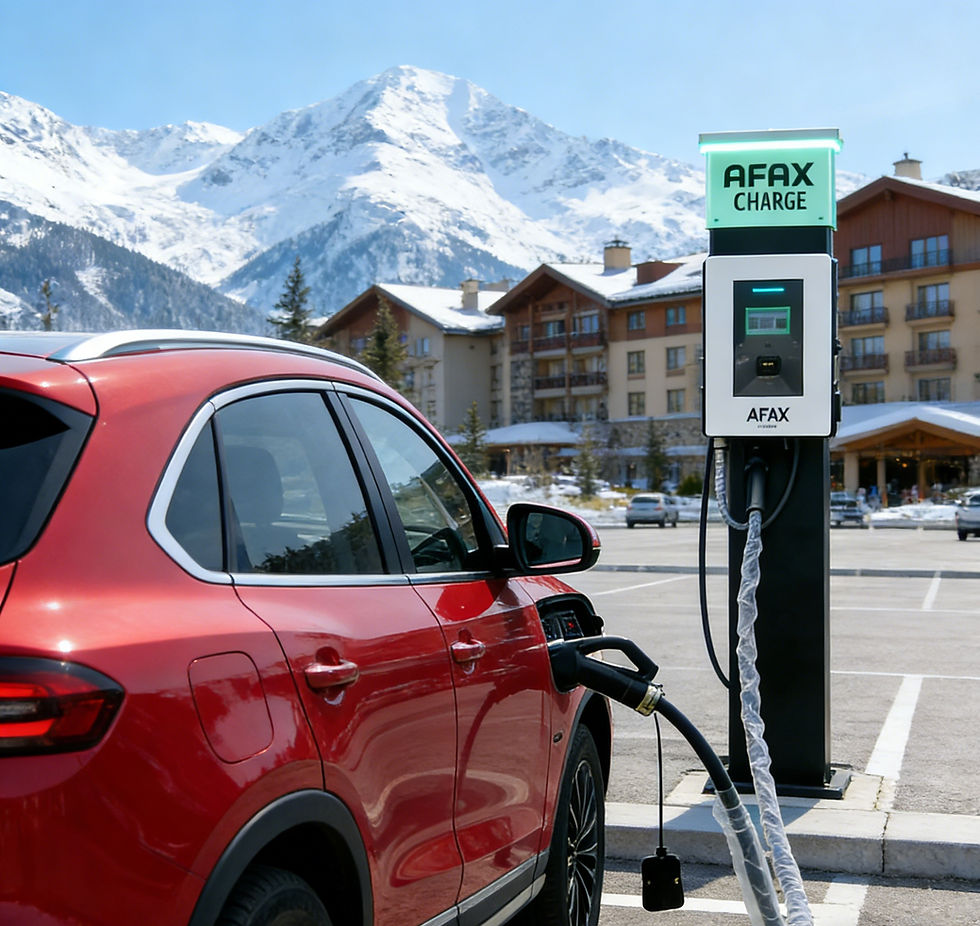
Companies like **Tesla, Electrify America, and Ionity** are rolling out **350 kW+ chargers**, reducing charging times to **under 20 minutes**. Startups like **[AFAX Power](www.afaxpower.com)** are also developing **high-efficiency charging solutions** for fleets and urban hubs.
Smart Charging & Load Management**
To prevent grid overload, companies are deploying **AI-powered smart charging systems** that optimize energy use based on demand. **Vehicle-to-Grid (V2G) technology**, which allows EVs to feed power back into the grid, is another promising solution.
Battery Swapping & Alternative Solutions**
For drivers who can’t wait for a charge, **battery-swapping stations (like NIO’s Power Swap)** offer a **5-minute battery replacement**. While still niche, this model could revolutionize charging in high-demand areas.
## **3. The Road Ahead: What’s Next for EV Charging?**
- **More Public-Private Partnerships** (e.g., automakers collaborating with charging networks)
- **Standardization of Charging Plugs & Payment Systems** (to reduce confusion)
- **Focus on Rural & Underserved Areas** (to ensure equitable access)
A Future Without Charging Anxiety?**
While challenges remain, the combined efforts of **governments, automakers, and tech companies** are rapidly closing EV infrastructure gaps. With continued investment and innovation, **charging anxiety could soon become a thing of the past**.
#EVCharging #ChargingAnxiety #CleanEnergy #ElectricVehicles #SmartInfrastructure #SustainableTransport**


Comments